Mazzaltov World News provides you with the latest live coverage of Current Affairs, Sports, Health, Weather, Entertainment, Business and Travel News from around the world.
Here’s where things stand on Thursday 24 July 2025:
- More than 100 aid agencies warn that “mass starvation” is spreading across Gaza, accusing Israel of not allowing food inside the Strip to be distributed
- The UN says this could lead to “catastrophic birth outcomes”, as pregnant Gazans tell the BBC they don’t want “to give birth in these circumstances”
- Meanwhile, the Hamas-run health ministry in Gaza says that 10 people have died of malnutrition in the last 24 hours alone
- Israel – which controls all border crossings in Gaza – says there are 700 trucks’ worth of aid inside Gaza waiting to be picked up and the aid shortage is “engineered by Hamas”
- Israel says its ground and air offensive continues, with the Hamas-run Civil Defence agency reporting 17 people were killed by air strikes in Gaza on Wednesday
UN warns starvation crisis in Gaza could have ‘catastrophic birth outcomes’

We’ll soon be pausing our coverage of the war between Israel and Gaza and the growing warnings about starvation in the Strip. Here are today’s key developments:
On the situation in Gaza:
- The World Health Organization says it is “witnessing a deadly surge in malnutrition-related deaths” and that it’s documented 21 deaths related to malnutrition in children under five this year so far
- The United Nations sexual and reproductive health agency warns of “catastrophic birth outcomes” in Gaza as a result of “starvation, psychological trauma and collapsing healthcare”
On Israel’s aid distribution system:
- Israel pushed back against accusations of being responsible for a hunger crisis in Gaza, with its government spokesman saying there was a “man-made shortage, engineered by Hamas”
- Israeli President Isaac Herzog also rejected those claims, saying Israel is “providing humanitarian aid according to international law”
Meanwhile, Gazans have been telling the BBC about what life is like for them as more than 100 charities jointly warned in a statement that “mass starvation is spreading” in territory:
- A hungry pregnant woman said she hopes “that my baby stays in my womb and I don’t have to give birth in these difficult circumstances”
- While a father of six said “there’s no value in money” anymore as he struggles to put food on the table
- An aid worker
‘We are providing humanitarian aid according to international law’ – Israeli president
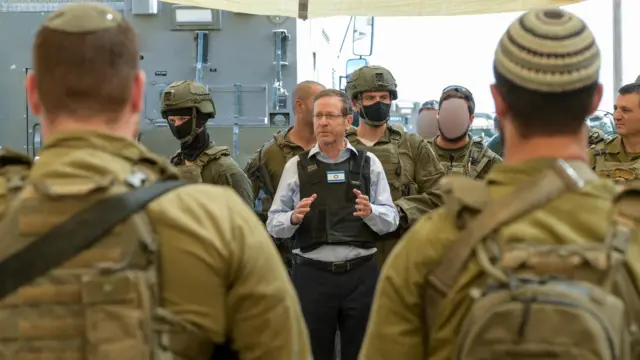
Israeli President Isaac Herzog has visited IDF soldiers in the Gaza Strip, rejecting accusations that Israel is responsible for a humanitarian crisis in the region.
“We are acting here according to international law. We are providing humanitarian aid according to international law,” Herzog tells reservists from Battalion 969.
“The ones trying to sabotage this aid are Hamas and its people, who are willing to do everything to prevent our forces from dismantling infrastructure that could harm us and our citizens.”
And Herzog stresses that Israeli soldiers are “fighting to change the reality and to bring our hostages home”.
It is Herzog’s first visit to Gaza since the war began in October 2023.
Gaza academic tells of rushing to help a man who collapsed from hunger
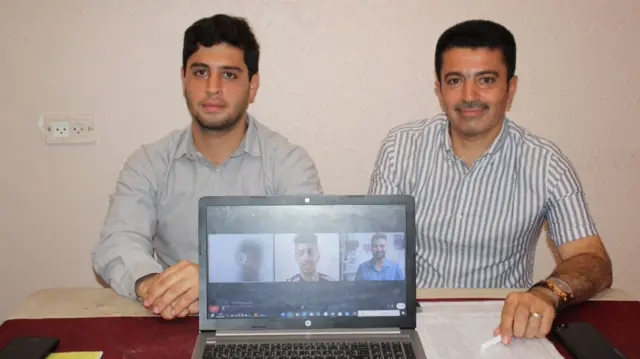
Dr Fadi Nasser was searching for something to eat when a man in his 50s collapsed suddenly on the pavement in front of him.
Immediately, the university lecturer dropped what he was doing and rushed to the man’s side, sprinkling water on his face to cool him down.
“I asked him what had happened, and he told me he hadn’t eaten anything for two days,” Dr Nasser tells me from northern Gaza.
The UN’s humanitarian agency Ocha said health officials had reported people collapsing in the street from exhaustion.
At least 10 people have died from starvation in the last day, according to Gaza’s Hamas-run health ministry.
Dr Nasser, who continues to teach classes to his students despite the war, tells me he tries to help others as much as he can. But sometimes there’s little he can do.
Earlier today, he walked past two children rummaging through garbage in search of something to eat.
“I walked away with tears in my eyes,” he says.
‘I am scared the most of the illness,’ says cancer patient struggling to get treatment
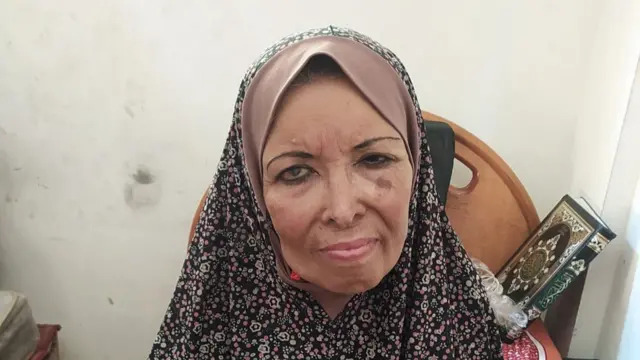
A woman with thyroid cancer and kidney failure says her health has “deteriorated badly” since the war began because of difficulties in accessing treatment.
Aida al-Safady, 61, says she is meant to have hormone injections three times a week for her cancer but is only able to get them once a week at Gaza’s al-Shifa hospital.
Aida also requires kidney dialysis four times a week but says she only gets it twice, if she’s “lucky”.
“I cannot even walk, so I have been in a wheelchair for months now.”
Like others, she says there is not enough food or drink to go around in Gaza, which has further worsened her health.
Aida, who is a widow and relies on the help of her son, says she fears for the future.
“I am scared the most of the illness, the immobility, the poverty and continuity of the war,” she adds.
GHF says its ‘constantly improving’ food delivery methods
The US- and Israel-backed Gaza Humanitarian Foundation (GHF) has said it is “constantly improving” its method of delivering food to those in Gaza.
In a new update, the GHF says 13 truckloads of potatoes were delivered yesterday as part of a new pilot programme – it says that this delivery was in addition to more than two million meals – which together came to 50 truckloads.
The foundation also calls on the international aid community to “join our efforts”.
This update comes after more than 100 aid agencies issued a collective warning of “mass starvation” amid reports from the Hamas-run health ministry of people dying from malnutrition.
The humanitarian organisations have said 28 lorries of food is being distributed each day on average.
‘We’re seeing lots of cases of pregnant ladies who are malnourished’
British paramedic Sam Sears – who we heard from a bit earlier – says medics at the first UK-funded field hospital in Gaza are receiving high numbers of malnourished patients.
“The food shortage here is an extreme pressure and it’s obviously getting worse,” he says over voice note from the facility in southern Gaza, which is run by British aid organisation UK-Med.
The markets have a “very limited supply” of things like tomatoes and cucumber, but staples like flour and sugar come with an “astronomical” price tag which most cannot afford.
He says they are also “seeing lots of cases of pregnant ladies who are malnourished”.
“Obviously, for the growing child it’s of paramount importance for that to be improved. We do have protein bars to give them as well as obviously advice and guidance when we can,” he says.
Israel says it will restrict staff from UN humanitarian agency
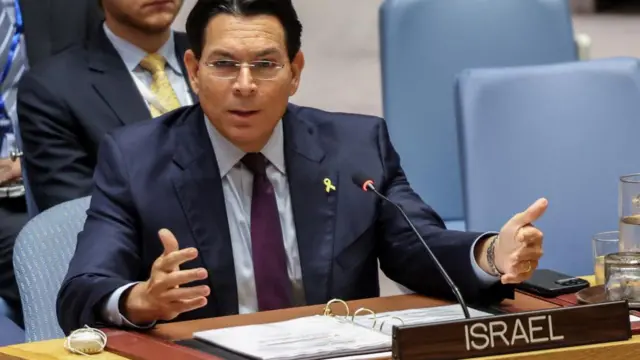
Israel’s representative to the UN is speaking before the Security Council in New York, where he says the country will take steps against the UN humanitarian agency Ocha.
Danny Danon says Israel will conduct security vetting of hundreds of Ocha employees, and “key employees” will not have their permits renewed.
The Office for the Coordination of Humanitarian Affairs has an office in Jerusalem and provides key data and information on the humanitarian situation in Gaza and the West Bank.
Danon cites “clear evidence of [Ocha staff’s] strong affiliation with Hamas”, though provides no further detail.
Danon also says Ocha’s head of office for the Occupied Palestinian Territory, Jonathan Whitthall, will not have his visa renewed and will have to leave the country by 29 July.
“Israel will take steps to ensure that what has been happening with Ocha will not continue,” Danon tells the chamber. “At some point enough is enough.”
Earlier, Ocha released a statement warning of “the rapid collapse of the last lifelines keeping people alive” in Gaza.
Hunger crisis in Gaza could lead to ‘catastrophic birth outcomes’, UN agency says
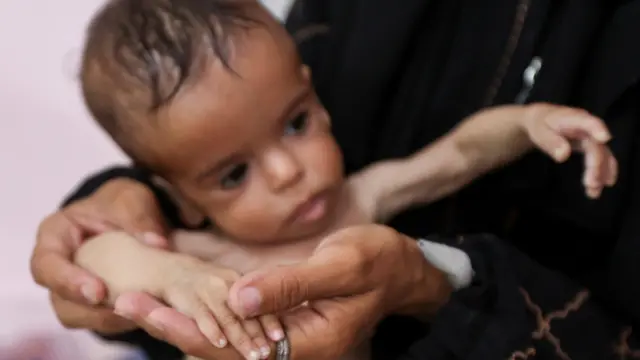
A little earlier, we reported on how one pregnant mother in Gaza feared giving birth as a result of the aid shortage in the territory. And the WHO has just said more than a fifth of pregnant and breastfeeding women in the Strip are malnourished.
Now, the United Nations sexual and reproductive health agency (UNFPA) is warning of “catastrophic birth outcomes” in Gaza as a result of “starvation, psychological trauma and collapsing healthcare”.
These conditions, the UNFPA warns, are “threatening the survival of an entire generation”.
The organisation offers data from the first half of 2025, which it says shows births sharply declined.
- In the first six months of 2022, there were 29,000
- In the year so far, there have been 17,000
It also says that 220 mothers died from January to June, which is “more than 20 times” the total number of maternal deaths recorded in 2022.
WHO warns of ‘deadly surge in malnutrition-related deaths’
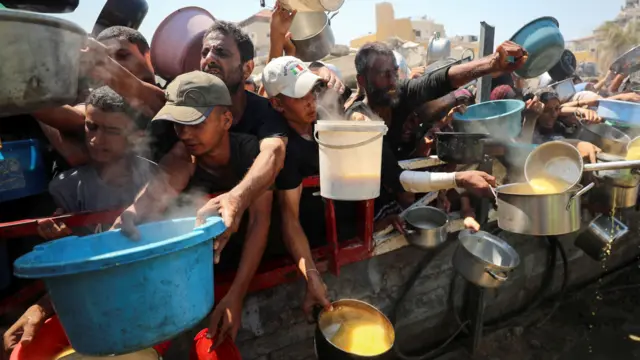
The World Health Organization says it is “witnessing a deadly surge in malnutrition-related deaths” in Gaza.
The organisation’s director-general, Tedros Adhanom Ghebreyesus, says that so far in 2025, the agency has documented 21 deaths related to malnutrition in children under the age of five.
More than a fifth of pregnant and breastfeeding women are malnourished, he adds.
He says that since Israel lifted the blockade in May, food deliveries have been “intermittent” and “far below what the population needs”.
“We call for the unimpeded flow of aid into Gaza, and for the unconditional release of the hostages,” he adds.
Earlier, an Israeli government spokesman told journalists that the food shortages in Gaza were “engineered by Hamas”.
‘There’s no value for money,’ says Gazan father struggling to feed his six children
I’ve been speaking to a father in Gaza, who’s been telling me about the costs involved with keeping his family alive amid the deepening hunger crisis in the Strip.
Mahmoud Abu Daqqa and his wife have six children, who range in age from one to 13 years old.
He tells me over WhatsApp how purchasing 3kg (6.6lb) of flour every day costs around $180 (roughly £133).
In the UK, a similar bag of flour would only come to around £4.
Stacked on top of that are the costs for nappies (Mahmoud tells me this adds up to around $150 every ten days) and formula for his infant – with one bottle costing $150 (£110) and lasting four days.
Market traders, Mahmoud tells me, now only accept cash, which means a transaction fee of another $50 (around £37) for every purchase.
Mahmoud has been documenting his daily life on TikTok to gather support, but he says his family is still only able to have “one piece of bread in the morning and one in the evening”.
“In the afternoon we cannot eat.”
These prices, Mahmoud says, “are only increasing, not becoming less”.
“There’s no value for money. You are paying $200-$300 daily but you’re still hungry, your child is still hungry,” he says.
“We are suffering a lot… We want to be safe.”
Hamas submits response to revised ceasefire proposal
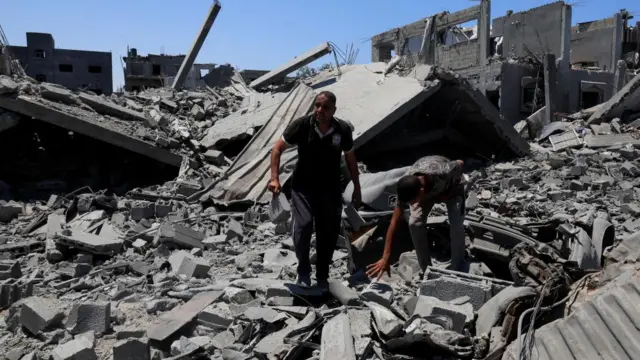
A senior Palestinian official familiar with the ongoing ceasefire talks told the BBC that Hamas submitted their official response today to the revised proposal presented by mediators aiming to secure a ceasefire in Gaza.
According to the official, the response followed consultation with other Palestinian factions and focused primarily on three critical issues: the mechanism for the entry of humanitarian aid into Gaza, maps detailing the Israeli withdrawal from areas captured during the war and guarantees to ensure a permanent end to hostilities and prevent a resumption of military operations.
A second Palestinian source involved in the talks confirmed the same information, adding that mediators have now received the response and are reviewing it in an effort to bridge the remaining gaps between the parties.
There seems to have been little movement on the key areas of disagreement, despite negotiations remaining ongoing.
Hospital staff struggling with food access, British paramedic says
In addition to aid workers and pregnant women, we’ve also been hearing from British paramedic Sam Sears, who is at a field hospital operated by the charity UK-Med.
The hospital is in Gaza’s Mawasi area which is home to thousands of displaced Palestinians living in tents – as we’ve heard from others, Sears says food here is scarce.
“Even as international staff here, we’re struggling to get fresh food, just eating a lot of rice and tinned vegetables at the moment,” Sears says.
The hospital sees around 2,000 patients a month, they say, but now their operation has been impacted after World Health Organization facilities came under attack in Deir al-Balah.
“We get a lot of supplies from the WHO. We rely on them for medications, for diagnostic equipment, but unfortunately that’s all now going to stop now that it’s been attacked,” Sears adds.
The UK-Med field hospital receives almost daily Palestinians who’ve been injured trying to get aid from the Israeli-backed Gaza Humanitarian Foundation distribution points.
The UN says over 1,000 Palestinians have been killed in recent weeks trying to get aid, with daily allegations from Palestinians of coming under Israeli or security contractor fire at the distribution points.
Israel has said it uses “warning fire” at the aid points and has disputed the number of reported deaths.
Aid worker describes fainting from hunger and exhaustion
As we’ve been hearing, aid workers themselves are not immune to the deepening hunger crisis in Gaza.
Maysoon, an Unrwa distribution worker in the north, fainted shortly after arriving for work today – due to exhaustion and hunger. She was found to have dangerously low blood pressure.
“The last meal I had was yesterday at 3pm, and it consisted of just half a piece of bread,” she says.
A teacher before the war, she has been displaced seven times and now lives in part of a damaged apartment.
“I work under continuous physical and psychological pressure, caused by sleep deprivation due to nonstop shelling for over two weeks around my home, and the fear and anxiety that accompany such conditions,” she adds.
She feels helpless in the face of her children’s “silent hunger crisis and the constant anxiety about our unknown future”.
The distribution worker – with no supplies to distribute – called for an urgent resumption of UN food deliveries.
Her work currently involves trying to prioritise the most vulnerable for when there is food available to give out.
“We love life,” she says. “All we ask for are our basic human rights to live with dignity and nothing more.”
People are selling gold for flour, woman in northern Gaza says
I’ve also been speaking over WhatsApp to 40-year-old Hanaa Almadhoun in northern Gaza.
She says the local markets are usually “empty of food or any basic goods, and if they do exist then they come at exorbitant prices that no ordinary person can afford”.
“Flour, which is the basis of everything, if found, is expensive and difficult to secure,” she says, adding that people have sold “their gold and personal belongings” to afford the food staple.
The mother-of-three says “every new day brings a new challenge” as people head out “in search of something edible”.
“With my own eyes, I’ve seen children rummaging through the garbage in search of food scraps,” she adds.
“There are no sanitary pads, no water for washing, no clean bathrooms, and no privacy,” she writes.
Hanaa says that people in Gaza have tried to find replacements for flour.
Israeli spokesman dismisses NGOs’ starvation warnings
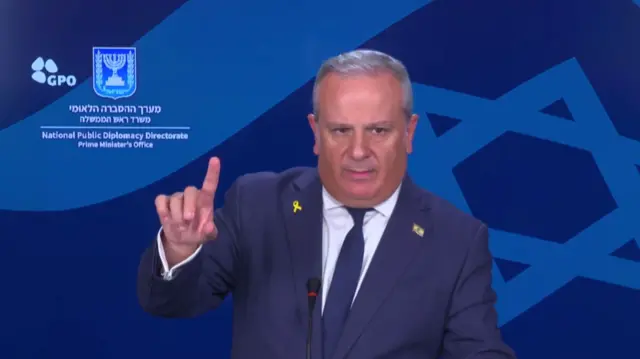
Mencer is now answering questions from the media.
He is asked to comment on the statement from more than 100 aid organisations, which says there is mass starvation in Gaza and call for a ceasefire.
Mencer says claims of a “famine” have been consistent throughout the conflict, he calls them “false warnings”.
“Where there is hunger in Gaza, it is hunger orchestrated by Hamas.”
Hunger is a tactic of Hamas to put pressure on Israel, he says.
Mencer claims UN is behind ‘bottleneck’ hindering aid distribution in Gaza
The Israeli government spokesperson says that, as of the last 24 hours, there are more than 700 aid trucks inside Gaza, waiting to be picked up by the UN.
Mencer blames the UN for this “bottleneck” and suggests the UN is the main obstacle to maintaining the flow of aid into Gaza.
No famine in Gaza but a ‘man-made shortage engineered by Hamas’ – Mencer says
There is no famine caused by Israel, Mencer says.
“There is a man-made shortage engineered by Hamas,” he says.
Aid has been flowing into Gaza through the Gaza Humanitarian Foundation (GHF) and through UN-coordinated shipments of raw materials for bakeries and communal kitchens, Mencer continues.
Between 19 July until Tuesday, more than 4,400 aid trucks have entered Gaza, he says, containing food, flour and baby food.
Yesterday, the GHF distributed two million meals to Gazans in one day, he says before adding that 87 million meals have been distributed by organisation in total.
“Hamas is trying to prevent the distribution of food,” Mencer says, adding “they are looting aid trucks”.
Nearly 900 IDF soldiers killed since 7 October
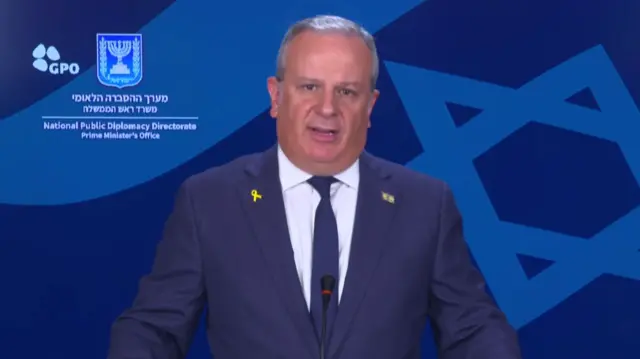
We are now hearing from Israeli government spokesperson David Mencer.
He opens his statement with “profound sorrow” over the loss of Israeli soldiers. He says 895 have died since 7 October 2023.
He adds that the two latest military casualties were killed in southern Gaza.
Israeli government to give press briefing
The Israeli government spokesperson David Mencer is about to deliver a briefing to journalists.
It is anticipated he will speak about the aid situation in Gaza.
We’ll bring you key updates here.
Warnings of a million children at risk of malnutrition
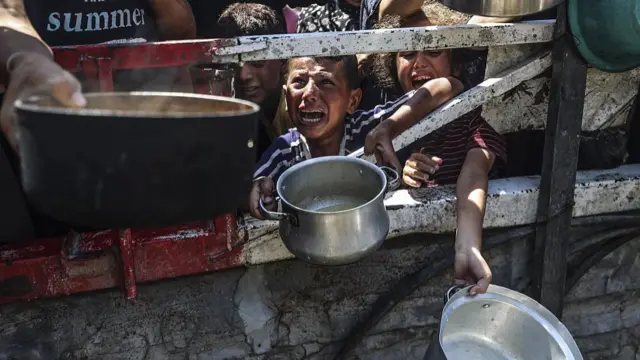
The Hamas-run health ministry in Gaza says ten people have died from malnutrition within the last 24 hours, as aid organisations across the world attempt to draw attention to the humanitarian situation and prompt action from the Israeli government – which says aid is waiting at the border.
Here’s the latest:
- The UN’s Palestinian refugee agency (Unwra) has warned there are one million children in the region who are at risk of severe malnutrition, with the Hamas-run health ministry saying 111 people have died due to starvation since the start of the war
- It comes as more than 100 NGOs said only 28 lorries’ worth of aid is being distributed each day on average – the situation has led to exorbitant prices for basic food products
- The Israeli government has said hundreds of trucks are poised at the border waiting for collection but the UN said it’s struggling to get commitments that Palestinians will not be killed while trying to access it
- UN Secretary General António Guterres called the situation a “horror show” – saying “starvation is knocking on every door”
- “Me and my children go to bed hungry every night,” a market seller told us, while a doctor said nurses at the Nasser hospital “don’t have enough energy to stand”
- Meanwhile the hostilities have continued after the recent escalation – with the Hamas-run health ministry reporting 113 deaths in the last 24 hours
Hamas-run health ministry says 113 killed in 24 hours
In the last 24 hours 113 people have been killed in Gaza, the Hamas-run health ministry says. A further 534 have been injured, it adds.
It says a number of victims remain under rubble and on the streets, with emergency services unable to access them.
The total death toll since 7 October 2023 has risen to 59,219, with 143,045 people injured, the statement adds.
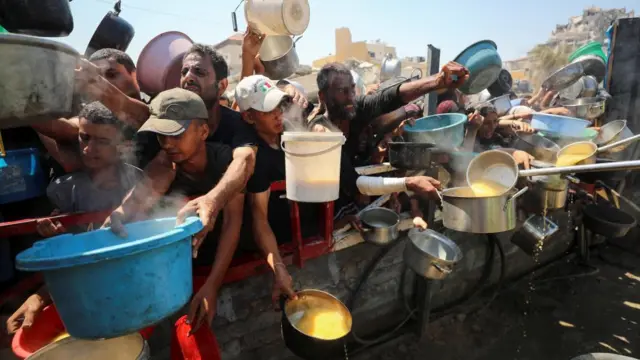
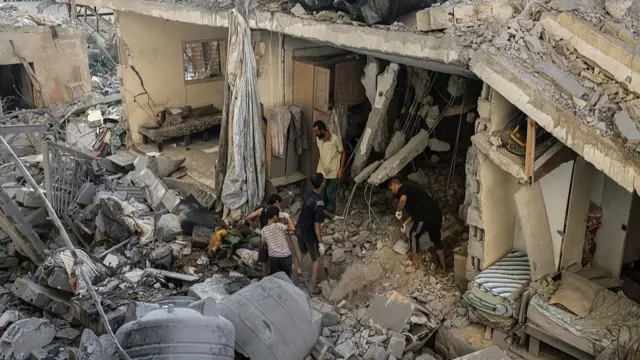
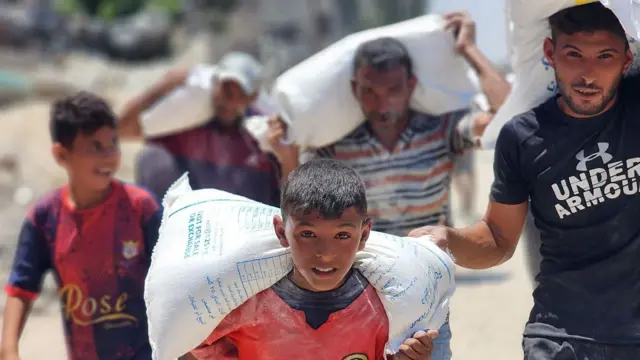
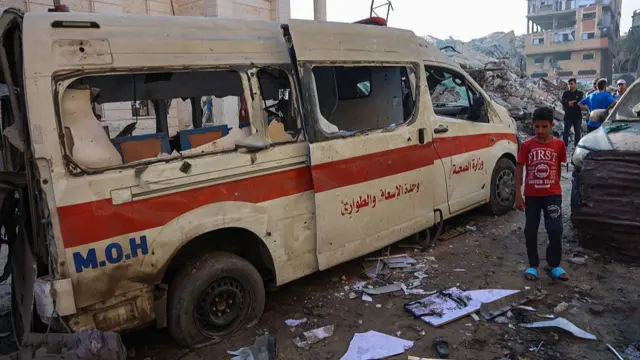
In pictures: Fight for food continues amid strikes
In the face of a “deepening operation” by the Israeli military, people in Gaza are struggling to access food.
Pictures from the Strip today show the damage caused in residential areas, and the conditions surrounding getting crucial supplies.