
Mazzaltov World News provides you with the latest live coverage of Current Affairs, Sports, Health, Weather, Entertainment, Business and Travel News from around the world.
Here’s where things stand on Friday 25 July 2025:
- France will officially recognise a Palestinian state in September, President Emmanuel Macron says, making it the first G7 nation to do so
- Palestinian officials welcome the decision, but Israeli Prime Minister Benjamin Netanyahu says it “rewards terror”, and US Secretary of State Marco Rubio says the move is “reckless”
- UK Prime Minister Keir Starmer will hold a call with French and German leaders today, as he faces growing pressure from MPs to recognise a Palestinian state
- Meanwhile the “entire humanitarian system is collapsing” in Gaza with the number of people dying from starvation rising, the UN’s Palestinian refugee agency (Unrwa) says
- On Thursday, the US and Israel withdrew their negotiating teams from Gaza ceasefire talks in Qatar, with Washington accusing Hamas of not “acting in good faith”
Netanyahu: Israel and US ‘considering alternative options’ to return hostages
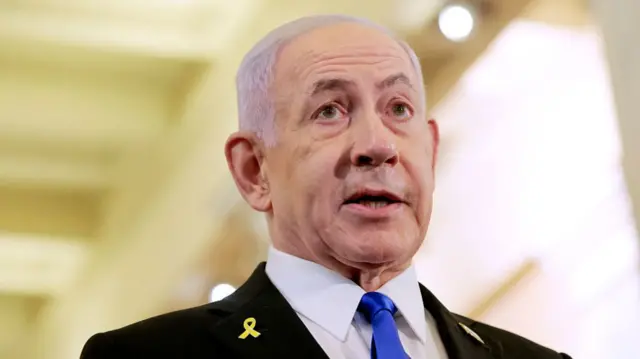
Israeli Prime Minister Benjamin Netanyahu says Israel is “considering alternative options” to bring hostages home from Gaza.
The latest round of ceasefire negotiations appeared to have broken down on Thursday when US envoy Steve Witkoff announced the US delegation would be leaving Qatar, and accused Hamas of not “acting in good faith”.
In a social media post, Netanyahu agreed and says Witkoff “got it right”.
“Hamas is the obstacle to a hostage release deal,” he says, adding that “together with our US allies”, Israel is looking at “alternative options” to secure the return of the hostages, as well as ending “Hamas’s terror rule” and securing “lasting peace” for the region.
As a reminder, Hamas has denied that ceasefire talks have collapsed, calling Witkoff’s comments “negative toward the movement’s position”.
Aid airdrops into Gaza have been problematic in the past
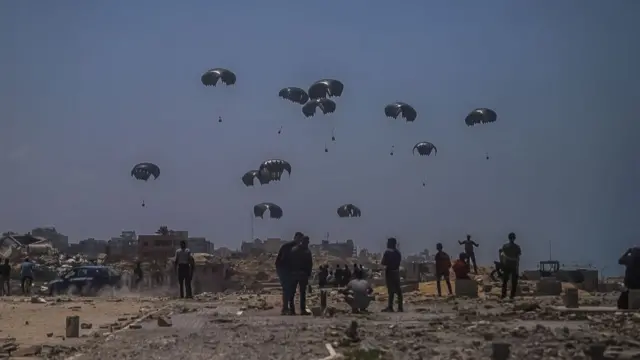
As we’ve been reporting, Israel has said it could allow foreign countries to airdrop aid into Gaza, where local health officials are reporting increasing numbers of deaths from starvation.
When such airdrops happened in 2024 after the UN said Gaza’s population was on the brink of famine, humanitarian organisations said this method of delivery could not meet the soaring needs.
The BBC travelled on an RAF plane dropping 10 tonnes of food and water into Gaza – less than a single truck would carry across a border on the ground.
The airdrops have also had unintended – and sometimes deadly – consequences. Some airdropped crates were blown over the sea as they parachuted down, and Palestinians drowned trying to get to them. Other people were killed or injured by crates falling from the sky when parachutes failed.
Nine more dead from malnutrition in last 24 hours – Gaza health ministry
Gaza’s Hamas-run health ministry says that nine people have died of malnutrition in the past 24 hours.
A total of 122 people, including 83 children, have died because of a lack of food since the war began, according to the ministry
Israel will allow foreign countries to carry out airdrops – reports
More now on potential airdrops of aid into Gaza.
Israeli army radio is reporting that foreign countries could carry out airdrops in the coming days.
The Times of Israel says that Jordan and the UAE will conduct this latest round of airdrops, though the BBC has not confirmed this.
Last year, countries including the UK, US and Jordan dropped supplies into Gaza from military planes – but that led to problems like aid falling into the sea and people drowning while trying to recover it.
Airdrops of aid into Gaza could be allowed in the coming days, Israel says
An Israeli security official says airdrops of aid into Gaza could be allowed in the coming days.
Some countries carried out airdrops last spring but aid agencies have previously warned it is an inefficient way to get supplies into Gaza.
We’ll have more detail on this shortly.
‘I can barely do one story’ – Freelance Gaza journalists speak of food struggle
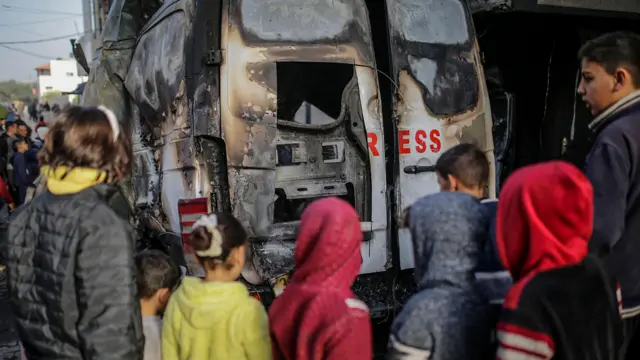
Three trusted freelance Palestinian journalists whom the BBC relies on for its Gaza coverage have shared how they are now struggling to feed their families and often go two days or more without eating.
It’s after the BBC released a joint statement with other media organisations saying it is “desperately concerned” about the wellbeing of local freelance journalists that it works with in Gaza.
“I feel tired and exhausted all the time, to the point of dizziness and falling to the ground,” says a veteran journalist who now works with us in Gaza City and is looking after his mother, sisters, and five children aged two to 16.
Meanwhile a cameraman in southern Gaza tells us: “My stomach twists in knots, and I have a headache, add to that being emaciated and weak. I used to work from 07:00 until 22:00 but now I can barely do one story. I just feel dizzy.”
One colleague says his autistic son is unaware of what is going on around him.
“In recent days, he’s so hungry that he’s started hitting his stomach with his hand to signal to us that he wants food,” he explains
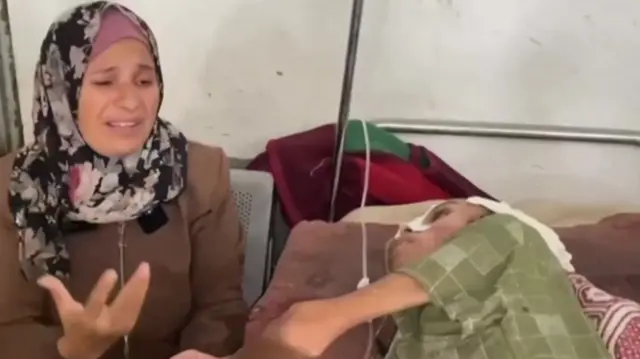
Gaza mother: My teenage son used to weigh 40kg – now he’s barely 10kg
Mosab, a 14-year-old Palestinian boy injured in an Israeli airstrike near his home last month, is deteriorating due to a lack of food and medicine, BBC News Arabic reports.
His mother, Shahenaz Al Debs, says he weighed 40kg (6.3 stone) before the injury, and now weighs “barely” 10kg (1.5 stone).
“We cry out a hundred thousand times, I died a thousand times a day,” she says.
The medical director at Gaza’s al-Shifa hospital, Dr Hassan al-Shaer, says the number of people suffering malnutrition is increasing.
“It was initially limited to children, but now we are seeing cases of malnutrition across all age groups,” he says, adding treatment is difficult because they “lack all the necessary supplies”.
Ceasefire talks have not collapsed, Hamas official tells BBC
A senior Hamas official tells the BBC that mediators had informed the group negotiations have not collapsed, despite recent remarks by US envoy Steve Witkoff and the withdrawal of both Israeli and American delegations from the ongoing talks.
According to the official, mediators conveyed that the Israeli delegation is expected to return to Doha next week, though no specific date has been set.
Hamas expressed surprise at Witkoff’s statements, describing them as “negative toward the movement’s position”.
Hamas said in a statement: “The movement affirms its commitment to completing the negotiations and engaging in them in a way that contributes to overcoming obstacles and reaching a permanent ceasefire agreement.”
Two versions of reality as Israel and UN clash over Gaza food
This is not the end of the talking — there will be more. But it’s probably a tactic being used to put pressure on Hamas.
That would be to counter the idea that the growing global awareness of the humanitarian catastrophe in Gaza — particularly among many Western countries, including some of Israel’s allies — has encouraged Hamas to take a harder line in talks.
There are two versions of reality – one pushed by Israel (backed by the US) and the other coming from Europe and the UN and its agencies. Israel insists there is plenty of food in Gaza. The opposite view – backed by strong, clear evidence – is that restrictions imposed by Israel are stopping vital food and other essentials reaching civilians.
But regardless of where you stand in that debate, the fact remains: the food is not reaching the people who need it.
There is overwhelming and indisputable evidence of a humanitarian catastrophe. Starvation is widespread. People are dying from hunger. Freelancers in Gaza are feeling it too. One said he fainted when filming because of hunger.
France is EU’s most influential state so far to recognise Palestinian State
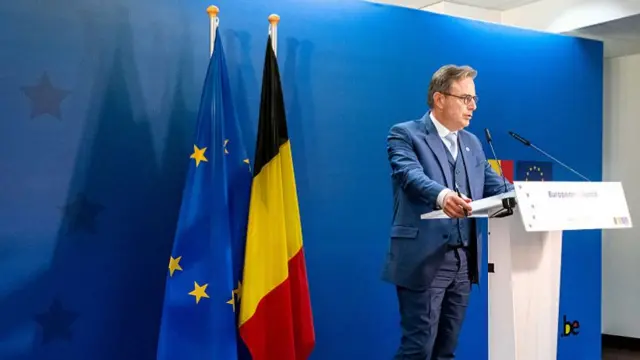
As a permanent member of the UN Security Council and part of the G7, France carries considerable weight diplomatically on the Middle East, far more than other EU countries that have already recognised a Palestinian state.
The EU’s other major Western power, Germany, believes recognition should come only at the end of peace negotiations with Israel on a two-state solution.
Sweden, Spain, Ireland and Slovenia are so far the only EU member states to have made the move while being part of the EU, so President Macron’s announcement is significant. Several other European states did so in the 1980s, including Poland and Hungary during the communist era.
Belgium, which has been one of Europe’s most vehement critics of Israel during the war with Hamas, is weighing up the issue and will reportedly come to a decision in early September.
Belgian Prime Minister Bart De Wever said in May that he personally didn’t think it was a sensible step as it would mean recognising a state when “you can’t tell what its borders are, who the authority is and therefore who to talk to as a partner”.
MSF says one in four young children and pregnant women malnourished
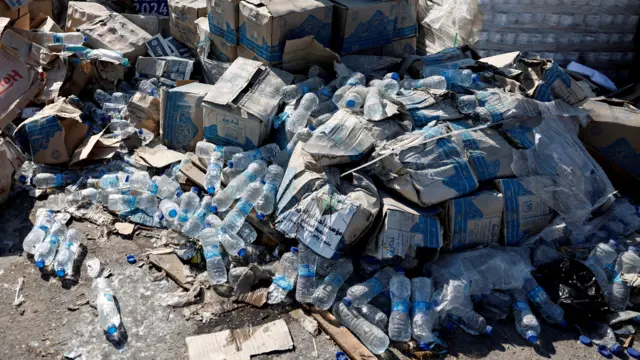
Humanitarian organisation Médecins Sans Frontières (MSF) says its teams are “witnessing catastrophic levels of malnutrition” among patients and staff in Gaza.
MSF calls attention to three key findings it says it has made on the ground:
- At MSF clinics, 25% of screened children and pregnant/breastfeeding women are malnourished, it says.
- Every day, there are 25 new cases of malnutrition among healthcare workers in Gaza City alone, it warns, as staff struggle to feed themselves
- More than 1,000 people have been killed and 7,200 injured at aid distribution points, it says
It comes after more than 100 humanitarian groups warned of mass starvation in Gaza. Israel says there is no siege on aid getting into Gaza.
No 10 not signalling any shift in position on Palestinian state
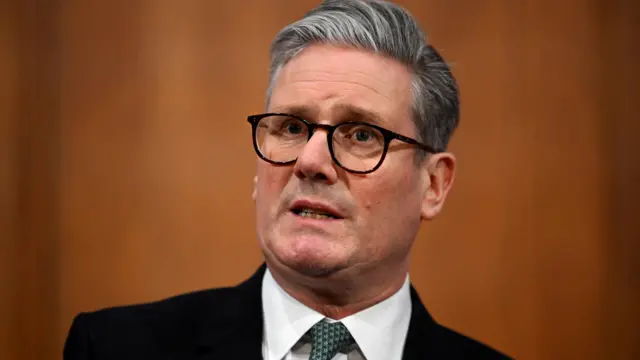
As ever, Keir Starmer is walking a potentially tricky trans-Atlantic diplomatic tightrope .
He’s got a call with Emmanuel Macron later, whose decision to say he will recognise a Palestinian state within months, has put pressure on the UK’s position.
Then President Trump flies in to Scotland, after his administration criticised the French move.
Despite growing calls from within Westminster for the UK to move towards recognition, Downing Street has not signalled it’s planning any shift in position.
In any case, it seems very unlikely any change would come before the planned meeting between the prime minister and the president.
What does recognising Palestinian statehood mean?
Recognition of Palestinian statehood is largely symbolic but profoundly political.
It’s meant to send a strong message – that the only way to achieve a sustainable peace in the Middle East is through the two-state solution, a Palestinian state alongside the state of Israel.
When a major European power like France takes this step, it highlights the right of Palestinians to self-determination and, for some, boosts fading hope that their decades-old aspiration can one day succeed.
But the current Israeli government is categorical – Palestinian statehood is not on the cards.
France’s move, which follows Spain, Norway, and Ireland in May 2024, has hardened Israel’s opposition and amplified threats to annex the occupied West Bank – the land of a future Palestinian state.
That’s why Britain’s Prime Minister Starmer has previously said the UK would only do it when it would have the “greatest impact.”
But as Palestinian suffering deepens, and far-right Israeli ministers call for the expulsion of Palestinians from Gaza, pressure mounts on Britain and other world powers to take a stand – before it’s too late.
The latest developments, summarised
- Later on, UK Prime Minister Keir Starmer will join an “emergency call” with France’s Emmanuel Macron and Germany’s Friedrich Merz on the humanitarian crisis in Gaza
- The UK is under growing pressure to recognise the state of Palestine, our chief international correspondent writes, after Macron pledged to do so in September
- The US and Israel have condemned the move, and separately withdrew their teams from ceasefire talks in Qatar after the US accused Hamas of “not acting in good faith”
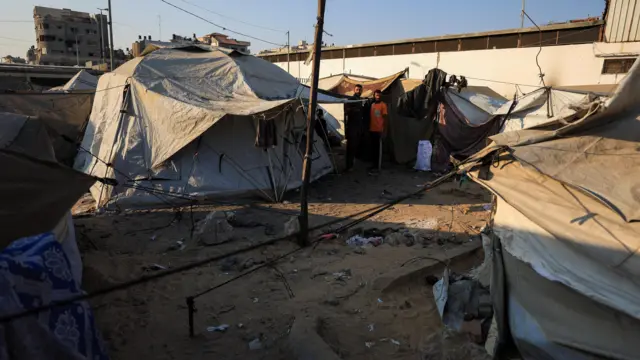
- Meanwhile, humanitarian conditions in Gaza are deteriorating rapidly after more than 100 humanitarian organisations warned of mass starvation
- Médecins Sans Frontières (MSF) says its teams are “witnessing catastrophic levels of malnutrition” – reporting that one in four young children and pregnant woman it screened are malnourished
- Speaking to the BBC, an Israeli government spokesman insists “there is no restriction” on the amount of aid that can enter Gaza
Israel is offering UN security it needs to give aid – Israeli spokesman
Mencer is asked whose responsibility it is under international law to ensure people in Gaza are fed.
“We have a duty as human beings, as a Jewish state, to ensure there is not starvation in Gaza,” he says, saying “we don’t need to be responsible to international law, it is our duty as a country, as a Jewish state… to make sure there is not starvation in Gaza”.
He says that is why they are “making it clear there is no restriction on the amount of aid that can enter”, and insists the Israeli army has offered the UN “all the security it needs to deliver the aid”.
“No-one wants to see Gazans suffering,” he says, insisting again Israel is facilitating aid and blaming Hamas.
For context: The UN has said at least 1,054 Palestinians have been killed by the Israeli military while seeking food since 27 May.
The chief of the UN’s Palestinian refugee agency (Unrwa), Philippe Lazzarini, said yesterday the organisation has 6,000 trucks’ worth of aid waiting in Egypt and Jordan to enter Gaza. He called on Israel to allow “unrestricted and uninterrupted humanitarian assistance to Gaza”.
Aid delivery in Gaza is a ‘two-pronged approach’, Israeli spokesman says
David Mencer is pressed on the Israel and US-backed aid system established by Israel – the Gaza Humanitarian Foundation (GHF).
If Israel set up this new system, and is now saying that aid distribution is failing, doesn’t that mean that Israel has failed, he’s asked on the Today programme.
Mencer replies there are two parts to the aid process: the GHF, which says in a statement that it has delivered 91 million meals, but also UN co-ordinated shipments of key supplies.
He suggests that he hasn’t shut one down in favour of the other, calling it a “two-pronged approach”.
When presenter Nick Robinson challenges Mencer that Israel has restricted the supply of aid through bureaucratic impediments, Mencer accuses him of “lying”.
Mencer then suggests that the UN is working in co-operation with Hamas to restrict the amount of aid to Gazans.
Israeli government spokesman challenged on starvation in Gaza
Israeli government spokesman David Mencer is now being interviewed on BBC Radio 4’s Today programme.
He’s asked if Israel accepts there is malnutrition in Gaza, it is getting worse, and people are starving.
Mencer accepts there are food shortages, but says they have been “engineered” by Hamas, and says it is not Israel’s fault that Hamas are “frustrating the distribution process”.
Pressed again, he says there is malnutrition and repeats accusations against Hamas.
There is no restriction to the amount of aid Israel wants to send, he says, saying there are 1,000 trucks of aid waiting in Gaza for distribution.
For context, more than 100 international aid organisations and human rights groups have warned of mass starvation, and the UN has previously suggested hundreds of trucks are needed a day to sustain the population in Gaza. The UN has also said repeatedly that it struggles to get the necessary Israeli authorisation to collect incoming supplies and transport them through military zones.
Minister pressed on when UK would recognise Palestinian statehood
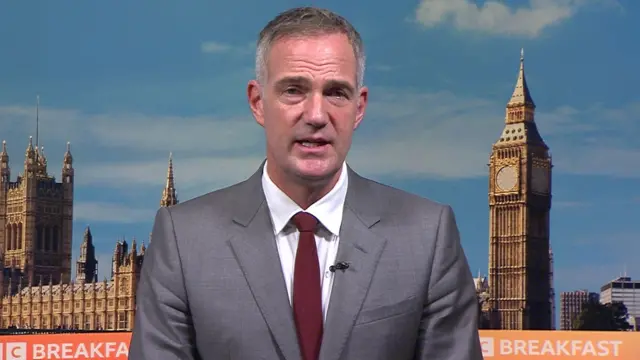
UK minister Peter Kyle says the government is committed to recognising a Palestinian state but does not give a timescale, saying it needs to ensure sovereignty can be “exercised at the moment of attaining statehood”.
France announced yesterday it will recognise a Palestinian state in September, and Kyle is asked on BBC Breakfast if the UK would follow suit.
He says the priority today is to “focus on the emergency we have before us today” and the need to get “food on people’s plates”, saying the prime minister is convening a meeting with the leaders of France and Germany.
Challenged again, he says: “It is a manifesto commitment of this government that we want to establish statehood for Palestine. It needs to happen in a way that will be empowering and deliver the long-term peace and stability that Palestine needs.”
“We are calling for a ceasefire and then of course we will do everything we can from a position of a supporter for the region to get the circumstances where there’s negotiations for the long-term statehood in Palestine and security for the region that they need,” he adds.
In Gaza, humanitarian conditions continue to deteriorate rapidly
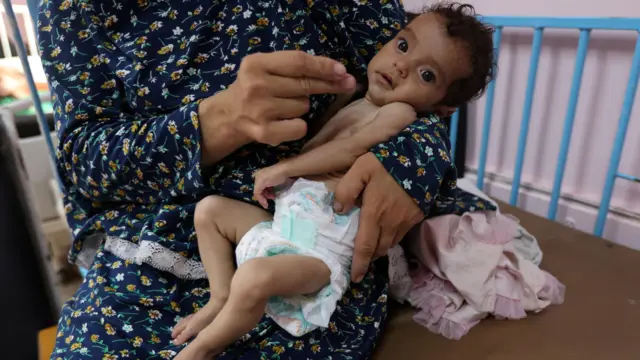
One in five children in Gaza City are now malnourished according to the UN’s Palestinian refugee agency (Unrwa).
In a statement issued on Thursday, Unrwa chief Philippe Lazzarini said “most children our teams are seeing are emaciated, weak and at high risk of dying if they don’t get the treatment they urgently need”.
More than 100 international humanitarian groups have warned of mass starvation, and on Wednesday the World Health Organization (WHO) said a large proportion of the population of Gaza was “starving”.
Israel, which controls the entry of all supplies into Gaza, says there is no siege and blames Hamas for any cases of malnutrition.
The UN, however, has warned that the level of aid getting into Gaza is “a trickle” and the hunger crisis in the territory “has never been so dire”.
Israel stopped aid deliveries to Gaza in early March following a two-month ceasefire. It has since established a new aid system run by the controversial US and Israel-backed Gaza Humanitarian Foundation (GHF).
According to the UN human rights office, more than 1,000 Palestinians have been killed by the Israeli military while trying to get food aid over the past two months.
It says at least 766 of them have been killed in the vicinity of the GHF’s four distribution centres.
Israel has accused Hamas of instigating the chaos near the aid sites. It says its troops have only fired warning shots and that they do not intentionally shoot civilians.
France will recognise Palestinian state, Macron says
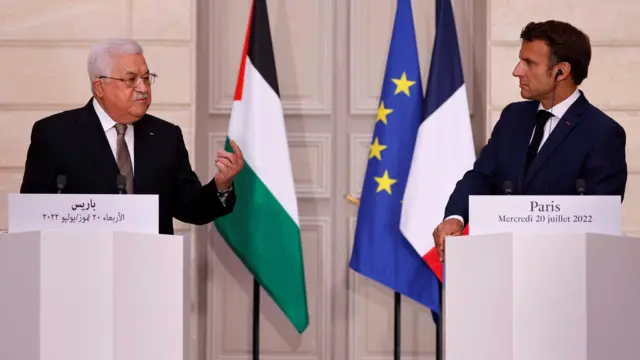
France will become the first G7 nation to recognise a Palestinian state when it makes a statement before the UN in September, President Emmanuel Macron has said.
In a social media post, Macron says the decision is “consistent” with France’s “historic commitment to a just and lasting peace in the Middle East”.
After calling for a ceasefire and the “release of all hostages”, Macron says: “We must build the State of Palestine, guarantee its viability, and ensure that by accepting its demilitarisation and fully recognising Israel, it contributes to the security of all in the region.”
Palestinian officials have welcomed Macron’s decision, but Israeli Prime Minister Benjamin Netanyahu calls it “a launch pad to annihilate Israel”.
The US also says it “strongly rejects” the declaration. Secretary of State Marco Rubio calls it “reckless”.
Currently, the State of Palestine is recognised by more than 140 of the 193 UN member states.
Israel and US leave Gaza ceasefire talks in Qatar
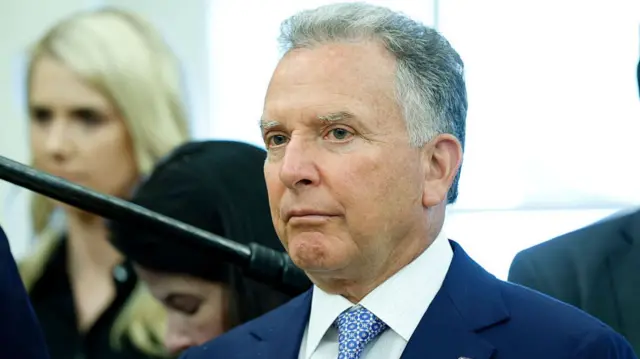
More now on the latest in Qatar, where the current round of Gaza ceasefire negotiations has been ongoing for the last two weeks.
As we mentioned briefly in our last post, Israel and US negotiators have departed talks yesterday, with Washington calling Hamas “selfish” and accusing the group of “not acting in good faith”.
US special envoy Steve Witkoff says in a statement that the US “decided to bring our team home from Doha for consultations after the latest response from Hamas, which clearly shows a lack of desire to reach a ceasefire in Gaza”.
Israel, meanwhile, does not say what triggered its withdrawal, but a senior Israeli official was quoted in local media as saying there was “no collapse” in the negotiations.
Hamas said it was surprised by Witkoff’s remarks and that it was keen to continue negotiations.
US and Israel condemn French decision to recognise Palestinian statepublished at 07:5607:56
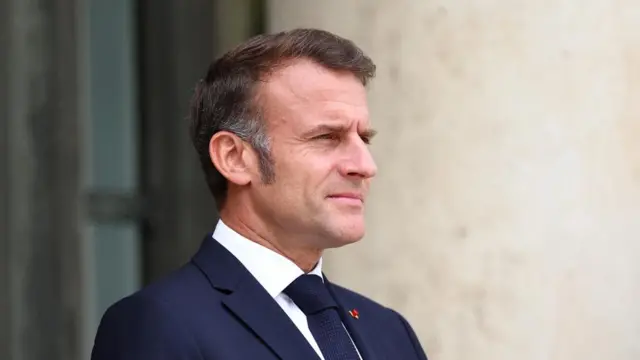
France will officially recognise a Palestinian state in September, President Emmanuel Macron announced last night.
Palestinian officials welcomed the decision, but Israeli Prime Minister Benjamin Netanyahu says it “rewards terror”, and US Secretary of State Marco Rubio says the move is “reckless”.
Macron says he and others have an obligation to show peace is possible, and that the “urgent priority today” is to end the war and bring relief to the people of Gaza.
But, also on Thursday, Israeli and US negotiators decided to leave Gaza ceasefire talks in Qatar, with Washington accusing Hamas of not “acting in good faith”. Hamas says it was surprised by the claim, and an Israeli source insisted there was “no collapse” in negotiations.
Meanwhile, the humanitarian conditions in Gaza are continuing to deteriorate rapidly. The UN’s Palestinian refugee agency (Unrwa) warns that one in five children in Gaza City is malnourished – in the north of the territory – and that cases are increasing every day.
Israel and Hamas both blame each other for the situation, while aid agencies have been calling on Israel to allow more aid to reach people in the territory, warning of mass starvation.
Stay with us across the day for updates and analysis.