
Discover today’s global news headlines and insights into all the latest Current Affairs, Sports, Health, Weather, Entertainment, Business and Travel News from around the world.Here is where things stand on Friday 30 May 2025:
Summary
- A senior Hamas official tells the BBC a US plan for a ceasefire in Gaza fails to meet its core demands – but it will continue to study the proposals
- The White House says Israel has “signed off” on a US-drafted deal and it’s waiting for a formal response from Hamas
- A draft of the plan reportedly proposes a 60-day truce and the release of Israeli hostages in exchange for Palestinian prisoners
- A previous two-month ceasefire collapsed in March when Israel imposed a total blockade on Gaza and resumed its military offensive – this post looks at how we got here
- Almost 4,000 people have been killed in Gaza since then, according to the Hamas-run health ministry – Israel says it’s acting to destroy Hamas and return hostages
- Meanwhile the UN’s humanitarian chief Tom Fletcher tells the BBC that Gaza has been subjected to forced starvation by Israel and greater action is needed to get aid in
Crowds gather at Khan Younis charity kitchen
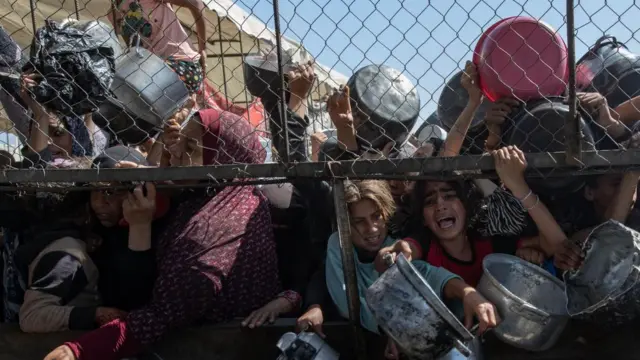
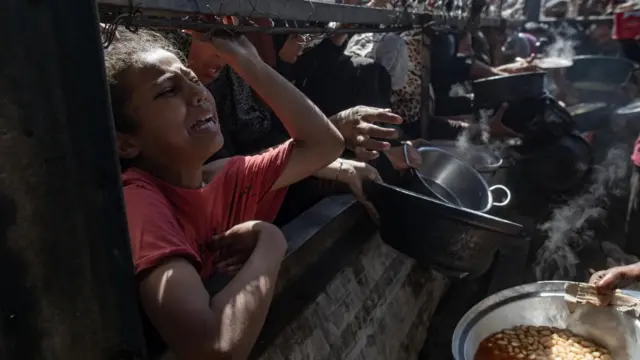
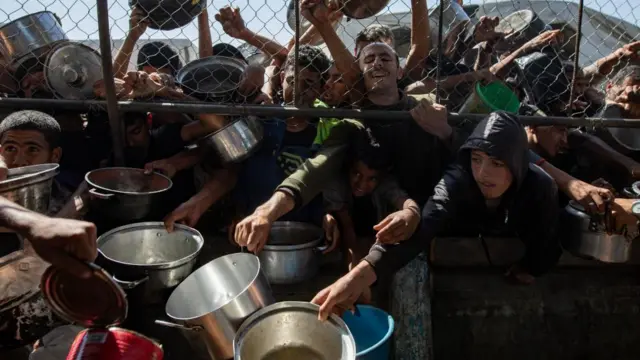
The below images show the scene outside of a food kitchen in Gaza earlier today.
They come from the European Pressphoto Agency, which says they show internally displaced Palestinians gathering at a charity kitchen in Khan Younis, in the south of the Gaza Strip.
As we’ve been reporting, the UN and humanitarian organisations have long been warning of food shortages and calling for more aid to be allowed in.
Israeli protesters try to stop aid trucks entering Gaza
Israeli protesters have gathered near the Kerem Shalom border crossing to try to block trucks carrying humanitarian aid into Gaza.
One of those joining the protest said aid should not be allowed to enter Gaza until Hamas accepts the US ceasefire proposal and returns hostages.
UN says Israel preventing vast majority of aid entering Gaza
A UN body has accused Israel of blocking the vast majority of aid from entering Gaza, and letting almost no ready-to-eat food into the territory, according to the Reuters news agency.
Gaza is the “hungriest place on Earth”, says Jens Laerke, a spokesman for the United Nations Office for the Coordination of Humanitarian Affairs.
Laerke tells reporters that only 600 out of 900 aid trucks had been given permission to get to Israel’s border with Gaza – with both bureaucratic and security obstacles making it nearly impossible to safely get aid to people.
“100% of the population of Gaza is at risk of famine,” Laerke says.
Ceasefire proposal fails to meet Hamas’s demands, official says

More now on that statement from Hamas official Basem Naim.
He says Hamas has received an “official response” from Israel to the proposal put forward by US special envoy Steve Witkoff.
That Israeli response, Naim says, “fails to meet any of the just and legitimate demands of our people, among them an immediate cessation of hostilities and an end to the humanitarian catastrophe unfolding in Gaza”.
But, he adds, “Hamas leadership is currently undertaking a thorough and responsible review of the new proposal”.
“This evaluation is guided by a deep sense of national responsibility and a steadfast commitment to protecting the rights and the future of Palestinian people on his land,” Naim continues.
Hamas official says group is reviewing ceasefire proposal
A Hamas official says the group is undertaking a “thorough” review of the US ceasefire proposal, but it “fails to meet any of the just and legitimate demands of our people”.
We’ll bring you more from that statement shortly.
Hamas studies ceasefire proposal as calls for aid continue
There’s been a lot of talk this morning about a fresh proposal for a ceasefire in Gaza. In case you’re just joining us, here’s what you need to know:
- Last night, the White House said Israel had “signed off” on a US-proposed plan for a ceasefire, and was waiting for formal response from Hamas
- It would reportedly include the handing over of some Israeli hostages held in Gaza, as well as the release of some Palestinian prisoners in Israeli jails – here’s what could be included
- A senior Hamas official has told the BBC that it is still studying the proposal, but says it doesn’t meet the group’s core demands – the BBC’s Gaza correspondent Rushdi Abualouf reports on the three sticking points
- Meanwhile calls for aid to be allowed into Gaza have continued. The UN’s humanitarian chief tells the BBC that Gazans have been subjected to forced starvation by Israel
- And French President Emmanuel Macron says “we will have to harden our collective situation” if Israel does not do more to respond to the ongoing humanitarian situation
Unrwa calls for aid at scale to be allowed into Gaza

As we’ve been reporting, the UN is continuing to call on Israel to allow more aid into Gaza amid reports of looting and widespread food shortages.
In a post on social media this morning, the UN’s Palestinian refugee agency (Unrwa) says it has enough supplies in a warehouse in Amman, Jordan – a three hour drive away – which could sustain more than 200,000 people for a month.
“Flour, food parcels, hygiene kits, blankets and medical supplies are ready to be delivered. Gaza needs aid at scale – an unhindered, uninterrupted flow of supplies must be allowed in,” it says.
Israeli security minister calls for ‘full force’ in Gaza
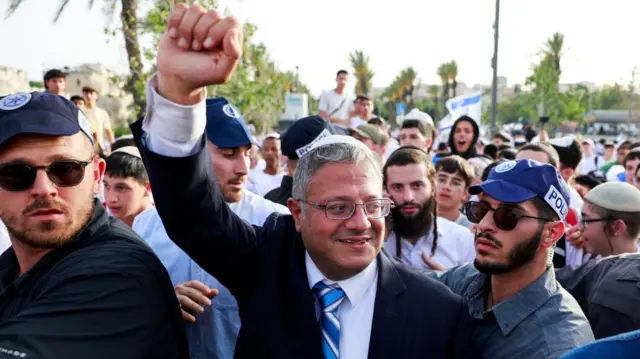
Israel’s far-right national security minister Itamar Ben-Gvir says it is time to use “full force” in Gaza.
Addressing Prime Minister Benjamin Netanyahu directly, Ben-Gvir says there are now “no more excuses”, claiming that Hamas has rejected a ceasefire deal.
As a reminder, a senior Hamas official has told the BBC that a US plan for a ceasefire in Gaza fails to meet its core demands but it will continue to study the proposals.
“The confusion, the shuffling and the weakness must end. We have already missed too many opportunities,” Ben-Gvir says.
“It is time to go in with full force, without blinking, to destroy, and kill Hamas to the last one.”
Incompatible demands sticking point in negotiations, former US special envoy says
A former US special envoy to the Middle East says the sticking point in ceasefire negotiations are incompatible demands being made by both sides.
David Satterfield tells BBC Radio 4’s Today programme that the US and Israel don’t want a deal where Hamas is left with a “quite potent” force, and want the ability to strike in Gaza again when they deem necessary.
Hamas, meanwhile, is asking for a total ceasefire and an end to the war, he says.
Satterfield adds that he thinks an arrangement can be made that includes the release of some hostages and a temporary ceasefire, but whether that translates into a longer-term deal is another question.
‘I want this to end and I hope we will reach a resolution,’ says hostage’s brother-in-law
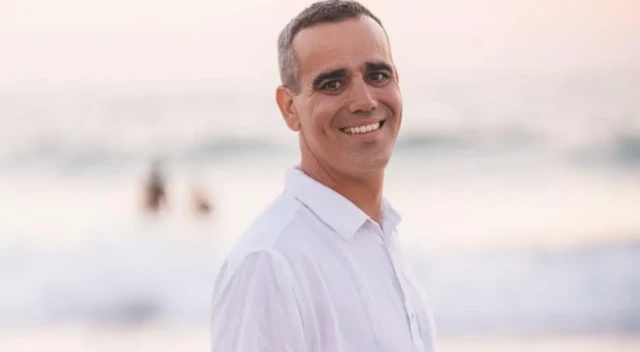
Moshe Emilio Lavi, whose brother-in-law Omri Miran is being held as a hostage by Hamas in Gaza, says the families of the remaining captives are trying not to focus on the “chatter” around the progress of the deal.
Instead, he tells BBC Radio 4’s Today programme, they are directing their energy towards campaigning for their release and to “continue with our mission” to force Hamas to accept a “viable deal”.
“If we focus too much on the news cycle, we’ll lose our minds to be honest,” Moshe says.
“I want this to end and I hope we will reach a resolution. Hamas needs to understand that for the sake of the people in Gaza and for the sake of the future of co-operation between Israelis and Palestinians, they have to let the hostages go.
“They have to dismantle and leave the Gaza Strip, so we can build something better together in the future,” Moshe says.
Reports of looting in Gaza as food shortage continues
The UN’s World Food Programme said on Wednesday that humanitarian needs in Gaza have “spiralled out of control”.
“Hordes of hungry people” broke into one of its warehouses in search of food this week, it said, with initial reports two people died during the incident.
It follows repeated warnings from the UN and humanitarian organisations about a dire shortage of food and other supplies, and calls for Israel to allow in more aid.
The UN’s Human Rights Office said almost 50 people were injured when crowds overwhelmed a new aid distribution centre run by the US and Israeli-backed Gaza Humanitarian Foundation in the southern city of Rafah on Tuesday.
A senior official said the UN was still gathering information but that most of the injuries were due to gunshots and that “it was shooting from the IDF [Israel Defense Forces]”. The Israeli military said troops fired warning shots into the air but not at the crowds.
All of this comes after Israel eased an 11-week blockade on aid entering Gaza – amid international pressure and warnings of a looming famine.
Israel says Hamas is responsible for the situation, and says it will provide for the humanitarian needs of the population of Gaza while taking what it deems necessary steps to ensure aid reaches civilians.
It says Hamas has been stealing aid meant for civilians, which the group denies doing.

Israel issues largest evacuation order since March
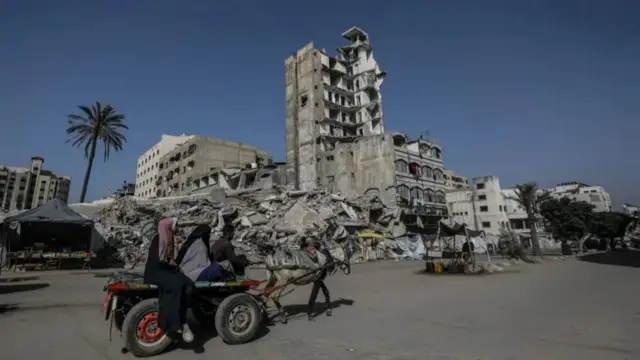
Yesterday, Israel issued the largest evacuation order to people in the Gaza Strip since the war resumed back in March.
It covers a huge area – about half a million people used to live there before the war.
It’s a sign that Israel might soon start expanding its military ground operation in Gaza.
And it comes at a time when the news from negotiations in Doha about ceasefire negotiations is not encouraging.
For context: On Thursday, the Israeli military warned people to evacuate from parts of northern Gaza and head west, claiming “terrorist organisations” were active there and saying it would expand its offensive in the designated areas.
Hope and despair over uncertainty of peace in Gaza
Saib, a Palestinian the BBC has been talking to in Gaza, says yesterday people were initially filled with joy at the possibility of a ceasefire deal.
Speaking on BBC Radio 4’s Today programme, Saib says people weren’t thinking about how it might not be a real possibility of peace – and that they “wanted someone to lie to us to be happy”.
“It was a very happy moment, but at the same moment when nothing was sure we lost hope somehow.
“It was a very bad moment when we went back to reality and the war,” Saib adds.
Hamas commander says group unlikely to accept
There are three main issues for Hamas in this ceasefire proposal.
First – they believe there is no clear line saying the temporary ceasefire will lead to a bigger, long-term ceasefire deal that would end the war.
Second – they say it is not clear what the so-called humanitarian protocol will be.
During the last ceasefire, around 400 – 500 aid trucks entered every day for distribution by the UN agencies and other charity organisations, not by the new controversial US-backed organisation in Gaza where they distribute food to people in Israeli military zones.
Lastly – they say it’s not clear that Israel would withdraw from Gaza back to the positions during the last ceasefire.
There are more concerns from Hamas and more comments about the deal – they say there is a big gap between what they have discussed through a back channel with the Americans that was taking place in Doha and the new Witkoff proposal.
I was speaking on the phone to a senior Hamas commander in Doha who is part of the negotiation team, and they said Hamas is very unlikely to accept this deal because they believe Israel wants only the hostages for free and Hamas will not give them that.
How did we get here?
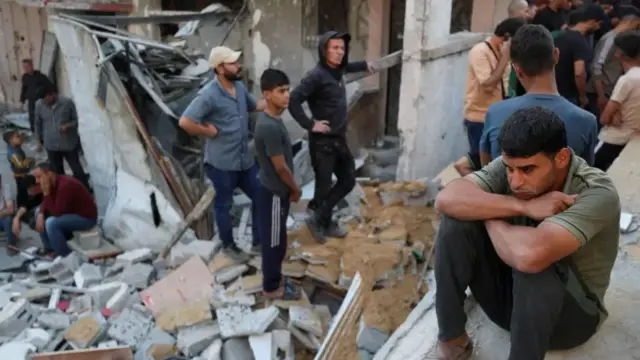
Israel imposed a total blockade on Gaza and resumed its military offensive against Hamas on 18 March, collapsing a two-month ceasefire brokered by the US, Qatar and Egypt.
It said it wanted to put pressure on Hamas to release the 58 hostages it is still holding, at least 20 of whom are believed to be alive.
On 19 May, the Israeli military launched an expanded offensive that Netanyahu said would see troops “take control of all areas” of Gaza. The next day, he said Israel would also ease the blockade and allow a “basic” amount of food into Gaza to prevent a famine.
Almost 4,000 people have been killed in Gaza over the past 10 weeks, according to the territory’s Hamas-run health ministry, while the UN says another 600,000 people have been displaced again by Israeli ground operations and evacuation orders.
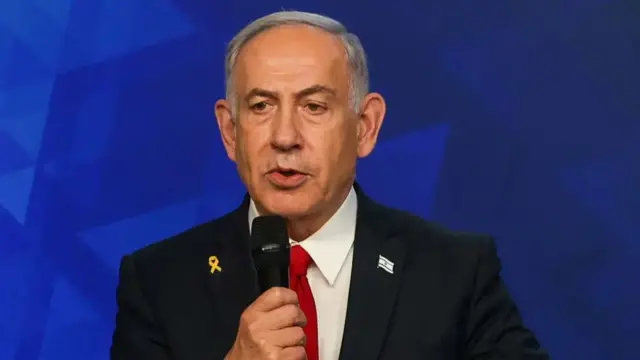
Israeli Prime Minister Benjamin Netanyahu has previously said that Israel will end the war only when all the hostages are released, Hamas is either destroyed or disarmed, and its leaders have been sent into exile.
Hamas has said it is ready to return all of those held captive, in exchange for a complete end to hostilities and full Israeli pull-out from Gaza.
Israel launched a military campaign in Gaza in response Hamas’ cross-border attack on 7 October 2023, in which about 1,200 people were killed and 251 others were taken hostage.
At least 54,249 people have been killed in Gaza during the war, including 3,986 since Israel resumed its offensive, according to the territory’s health ministry.
What the US, Israel and Hamas say about the plan
US
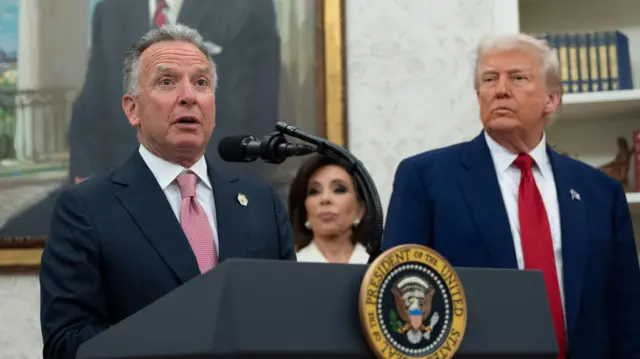
The White House says that President Donald Trump and his special envoy Steve Witkoff put forward a ceasefire deal to Hamas that Israel has “signed off on”.
“Those discussions are continuing,” the White House said on Thursday. It has not provided details of the proposal’s content.
Israel
The Israeli government has not officially commented.
But Prime Minister Benjamin Netanyahu reportedly told hostages’ families at a meeting on Thursday that he accepted the plan and Hamas had not at that point responded.
Israel’s Channel 12 TV reports that Netanyahu told the meeting: “We agree to accept the latest Witkoff plan that was conveyed to us tonight. Hamas has not yet responded. We do not believe Hamas will release the last hostage, and we will not leave the Strip until all the hostages are in our hands.”
Hamas
Hamas is still considering the deal and has not released an official comment.
But a senior Hamas official tells the BBC it does not satisfy core its demands, including guarantees the temporary truce will lead to a permanent ceasefire, or a return to the humanitarian protocol that allowed hundreds of aid trucks a day into Gaza during the last ceasefire.
But the official says Hamas remains in contact with the mediators and will submit its written response in due course
Macron to harden stance on Israel unless more aid reaches Gaza

French President Emmanuel Macron says “we will have to harden our collective position” if Israel does not do more to respond to the humanitarian situation in Gaza.
Speaking on a trip to Singapore, Macron reportedly says such a step would be necessary if more is not done “in the coming hours and days”.
He also says recognising a Palestinian state with conditions is a “moral duty”.
Israel announces major expansion of settlements in occupied West Bank
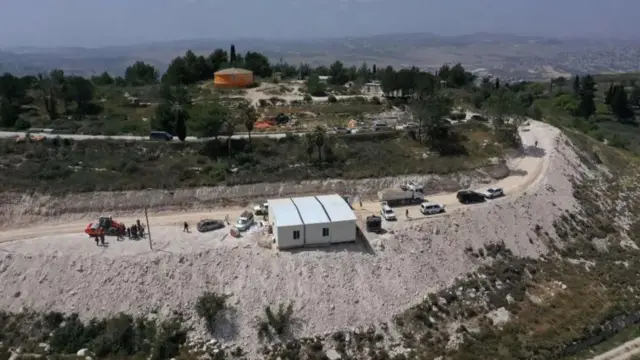
Israeli ministers say 22 new Jewish settlements have been approved in the occupied West Bank – the biggest expansion in decades.
Several already exist as outposts, built without government authorisation, but will now be made legal under Israeli law. Others are completely new, according to Defence Minister Israel Katz and Finance Minister Bezalel Smotrich.
Settlements – which are widely seen as illegal under international law, though Israel disputes this – are one of the most contentious issues between Israel and the Palestinians.
Katz said the move “prevents the establishment of a Palestinian state that would endanger Israel”, while the Palestinian presidency called it a “dangerous escalation”.
The Israeli anti-settlement watchdog Peace Now called it “the most extensive move of its kind” in more than 30 years and warned that it would “dramatically reshape the West Bank and entrench the occupation even further”.
World has responsibility to get aid into Gaza, UN official
Gaza has been subjected to forced starvation by Israel, a top UN official tells the BBC.
Tom Fletcher tells the BBC’s special correspondent Fergal Keane that the world has a responsibility to take greater action to get aid into Gaza and to “act to prevent genocide”.
Israel has claimed Hamas steals food aid and has accused the UN of refusing to co-operate with their military-organised aid distribution centres.
Fletcher says some supplies were taken by armed gangs but most of the aid had got through to the distribution centres.
What’s reportedly in the ceasefire deal
The White House says it has put a proposed ceasefire deal, which it says Israel supports, to Hamas for consideration.
No official wording has been made public and the content remains unconfirmed.
News agency Reuters says the proposal is for a 60-day ceasefire and the release of 28 Israeli hostages – alive and dead – in the first week. In exchange, it proposes Israel would release 1,236 Palestinian prisoners and the remains of 180 dead Palestinians, Reuters reports.
It also reportedly includes sending humanitarian aid to Gaza via the UN and aid organisations once Hamas signs off on the agreement.
Reuters reports that the remaining 30 hostages would then be released once a permanent ceasefire is in place, and that Israel would cease all military operations in Gaza as soon as the truce takes effect.
Israeli media has cited Israeli officials as saying the deal would see Hamas hand over 10 living hostages and the bodies of 18 dead hostages in two phases in exchange for a 60-day ceasefire and the release of Palestinian prisoners in Israeli jails.
Hamas gives cool response to latest Gaza ceasefire proposal
Earlier this week, President Trump’s Middle East envoy expressed optimism about brokering an agreement to halt the war and return more of the hostages captured in the deadly attack which triggered it.
The White House then said Israel “backed and supported” the new proposal.
But a senior Hamas official told the BBC that what had been drawn up contradicted earlier discussions his group had with a US representative. Reuters claims to have seen the latest deal.
It’s said to involve a 60-day pause in fighting as well as talks on a lasting ceasefire, with guarantees on its implementation from President Trump.
It’s not clear if these meet Hamas demands for US assurances that Israel will not resume fighting after the release of hostages, as it did in March. The plan is also said to involve an influx of desperately needed aid to Gaza if Hamas signs it off.
Hamas says US plan for Gaza ceasefire fails to meet its core demands
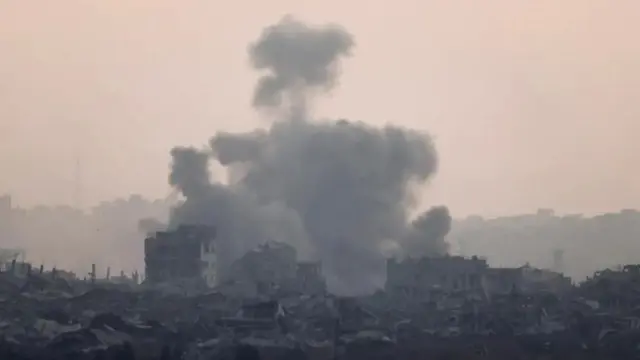
Hamas says a US plan for a ceasefire in Gaza fails to meet its core demands but it will continue to study the proposals.
The White House said on Thursday that Israel had “signed off” on US envoy Steve Witkoff’s plan and that it was waiting for a formal response from Hamas.
Israeli media cited Israeli officials as saying it would see Hamas hand over 10 living hostages and the bodies of 18 dead hostages in two phases in exchange for a 60-day ceasefire and the release of Palestinian prisoners in Israeli jails.
A senior Hamas official tells the BBC the proposal does not satisfy core demands, including an end to the war, and that it would respond in due course.
The Israeli government has not commented, but Prime Minister Benjamin Netanyahu reportedly told hostages’ families on Thursday that he accepted Witkoff’s plan.
Stay with us as our teams here in the London newsroom and across the region bring you the latest updates and analysis throughout the day.