
Mazzaltov World News provides you with the latest live coverage of Current Affairs, Sports, Health, Weather, Entertainment, Business and Travel News from around the world.
Here’s where things stand on Thursday 31 July 2025:
- Donald Trump has paused putting higher tariffs on Mexico for another 90 days, as other countries try to secure a deal before the midnight deadline
- Trump announced his tariff plan in April, sending chaos rippling through the world economy. But he paused it so countries could negotiate new trade deals
- Many nations do not yet have a deal with the US and face steep tariff rates from 00:01 EDT (05:01BST) Friday – as high as 50% for Brazil
- The UK and the EU are among those who have made deals with the US – here’s a list of who else has
- Companies that bring foreign goods into the US will have to pay the taxes to the government, and experts say these companies may pass costs on to consumers
Trump to speak soon as deadline inches closer
We are expecting to hear from President Donald Trump soon at the White House.
He is signing an executive order that would reinstate a fitness test for school children after it was abandoned in 2012.
We expect the president to take reporters’ questions and they will likely centre on tariffs, with the deadline just hours away.
Key amongst them will be what happens to countries who have not reached a trade deal with the US, like Canada and India.
We’ll bring you the latest lines here, or you can follow along by clicking Watch live at the top of this page.
Ontario premier says Canada should hit back hard on Trump tariffs
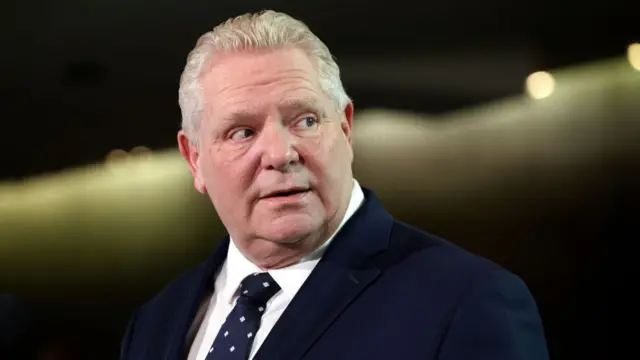
Ontario Premier Doug Ford said he urged Prime Minister Mark Carney not to back down from Trump during tariff negotiations.
“Prime Minister Carney is trying his best, but this guy will say something one day, and he’ll wake up, and the cheese slips off the cracker, and then all of a sudden he goes the other way,” he told reporters
“And you’re thinking, ‘How do you deal with a guy like this?’”
He said he’s hoping the country gets a deal with zero tariffs but that Carney should take a stand against Trump. Trump also posted on social media Thursday morning that Canada’s plans to recognise a Palestinian state will “make it very hard” to reach a deal.
“I told the prime minister, do not roll over. Hit that guy back as hard as we possibly can. That’s what we need to do — and we can do it,” Ford said.
‘It just feels unfair’
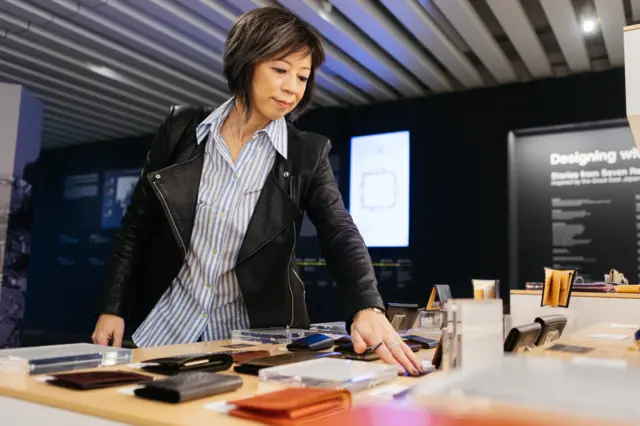
As we report on the latest in Trump’s tariffs saga, we have also been talking to average Americans and small businesses on how they are reacting to the new developments.
Anri Seki is executive vice-president of Waza, a Los Angeles shop that employs about 30 people in the US selling Japan-made products like kitchen knives and incense.
After months of uncertainty, she is hoping the business will be able to move forward. To cover the new costs, her business has already started raising prices by 10% to 20%.
So far sales are holding up.
But despite efforts in Japan and the US to sell a deal on a 15% tariff as positive, she says the outcome is disappointing and is pushing the firm to consider looking outside the US to expand.
“It just feels unfair,” she said. “It’s really hard for everyone to see what is the good ending point.”
Could tariffs hurt Americans’ love for coffee?
Brazil is the world’s top exporter of coffee, which now faces a 50% US tariff.
The US gets about a third of its coffee from Brazil, through major brands like Starbucks, Keurig, and Nescafé.
So what does this mean for Brazilian businesses, and Americans’ morning cups of Joe?
Either prices for Americans will rise as companies pass on the cost, or Brazilian producers will absorb the hit themselves. Likely, it’ll be a mix of both.
Brazil may seek new buyers globally, but exporters say that won’t offset the short-term impact.
Cecafe, Brazil’s coffee exporters council, says both countries will feel the effects, since Brazil is the world’s largest coffee producer and the US its biggest buyer.
The council tells me the impact on Brazilian roasters and exporters will be “significant” and price hikes are expected for Americans too.
The tariff is set to come into effect on 6 August, and exporters say they hope a coffee exclusion will be announced before then. Reuters reported that world coffee prices rose on Thursday, but “gains were muted overall” as traders held out hope for the exclusion as well.
Tariffs have been a nightmare, says Utah businessmanpublished at 21:1021:10
 Natalie Sherman
New York business reporter
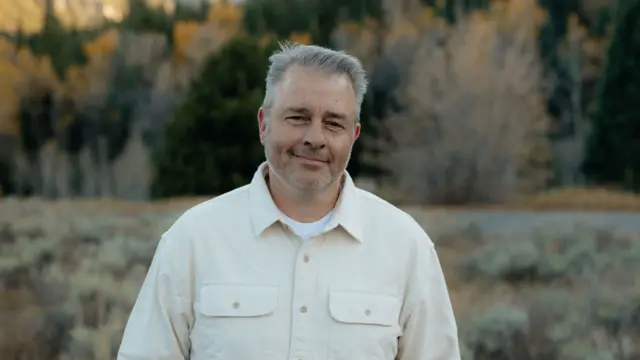
Jared Hendricks, the owner of Utah-based Village Lighting Company, says tariffs have been a “nightmare” for his small firm selling Christmas lights and decor mostly made in southeast Asia.
He had hoped to get his orders in before 1 August, but is still waiting for many shipments after struggling to compete with bigger players also pressing suppliers and shipping firms to deliver before the deadline.
When I spoke to him earlier this month, he was reeling from news of Trump’s trade deal with Indonesia, which meant 10 containers of holiday storage items he is waiting on would be hit with a 19% tax, instead of the 10% that had been charged since April.
For a seasonal business, the financial challenges are particularly acute. He said he had taken out a $1.5bn loan to try to handle the unexpected costs.
But the tariffs are costing big businesses too. Ford, for example, expects $2bn in tariff expense this year, despite making most of its cars in the US.
Democrats say Trump tariff ‘chaos’ will hurt families
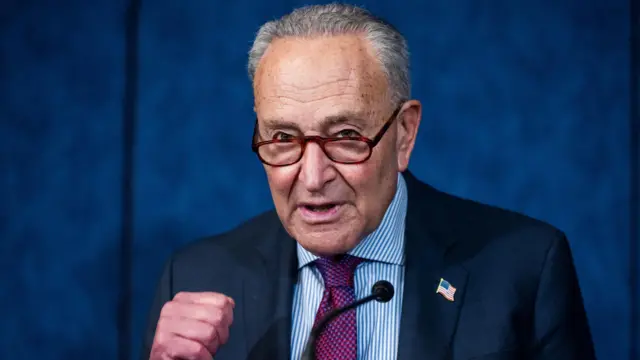
The White House has touted the tariff deals as a win saying it will bring in billions of dollars to the US economy.
But as the tariff clock continues to tick down, Congressional Democrats are warning it will hurt families.
“Toothpaste. Toilet paper. Dish soap. All going up in price,” Congressman Ruben Gallego said in a post on X. He added that Trump’s “chaos always comes with a cost and working families pay it”.
Senate Democratic leader Chuck Schumer has long been a vocal opponent of tariffs, and he lambasted Senate Republicans for not supporting a bill to block them.
“Senate Republicans chose to worship at Donald Trump’s altar yet again, even though they know these tariffs are terrible for people back home,” he said in a post.
Democratic senator Tammy Baldwin said the tariff announcement has left farmers, manufacturers, and workers “in limbo”.
“As we stare down another one of his self-imposed tariff deadlines, one thing’s for certain: this chaos is hurting American small businesses,” she wrote.
What are US financial markets saying?
Financial markets in the US appear to be staying calm ahead of the midnight deadline, with the top three indexes remaining steady.
In terms of commodities, the value of copper is down 5%, crude oil is down 1% and natural gas is up by 2%.
And the US dollar is up 1.5%.
Foreign leaders would be ‘hearing from this administration’ by midnight tonight – White House
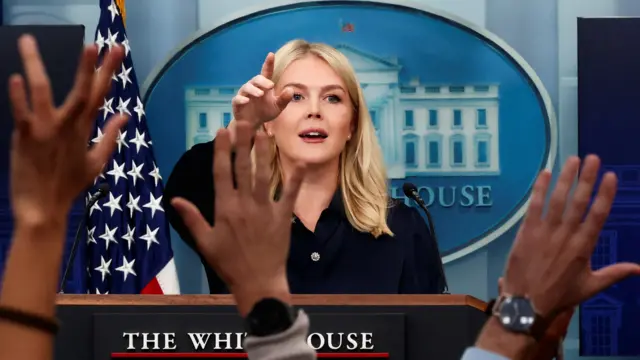
We have just heard from the White House as the clock ticks towards the midnight deadline for new global tariffs. Here’s a recap of what Karoline Leavitt has said:
- The Press Secretary says more deals could be made as foreign leaders seek to avoid steep tariffs announced back in April
- Leavitt affirmed that Trump “at some point this afternoon or later this evening” will sign an executive order imposing the new tariff rates
- Trump has previously suggested a blanket tariff rate of around 15% to 20% but there is no clarity on what the final decision is with hours to go
- More than 200 countries have reached out to do a deal, Leavitt says
- Already, tariffs have yielded $150bn in revenue for the US treasury and the revenues will “skyrocket” when the deadline passes, she says
- On China, the White House says it is continuing negotiations in Switzerland to reach a deal between the world’s two largest economies. Separately, there is an August 12 deadline for a tariff deal with China
Which EU countries will be worse off?
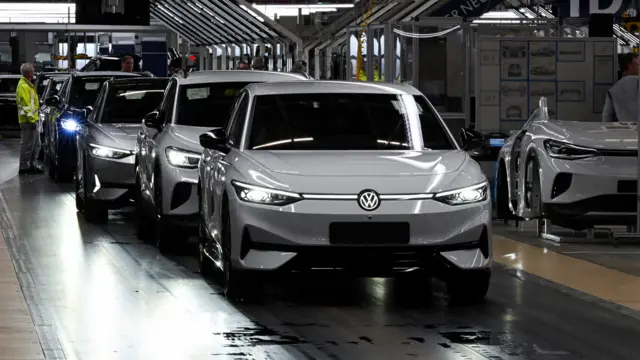
Karoline Leavitt just touted the EU deal for bringing in billions of dollars of investment for the US.
We’re looking at how the 15% tariffs announced earlier by Trump will hit EU countries. While each country will deal with the tariffs, they will each feel the effects in different ways.
Germany, Ireland and Italy are particularly exposed due to the nature of their partnerships with the US.
Germany:
- The US represents 13% of their exports, worth €34bn (£29bn)
- Hildegard Müller, president of the German Association of the Automotive Industry, said the new tariffs would be a costly burden
Ireland:
- Most reliant on the US as an export market
- Manufactures and exports pharmaceuticals worth $50bn a year
Italy:
- The agricultural, pharmaceutical and automotive sectors will suffer
- GDP could take a 0.2% hit as a result of the 15% levy, according to the Italian Institute of International Political Studies
Many questions left unanswered by White House
We’ve just wrapped up a relatively short press briefing from Press Secretary Karoline Leavitt at the White House – which focused heavily on tariffs.
As expected, the White House is still claiming tariffs very much as a victory, that they say will bring in billions of dollars to the US econony.
But even with some deals already announced – and some perhaps left to be made public by the time the clock strikes midnight tonight – there are clearly still many unanswered questions, and work to be done behind the scenes.
Notably, Leavitt did not provide much in the way of details regarding the tariff rates that will be levied on countries that have yet to come to a deal.
And although she teased that other conversations have taken place between Trump and other world leaders, she declined to provide specifics – noting that any further announcements would come from Trump directly.
It’s clear, however, that last minute scrambling and negotiating are taking place at a frenzied pace.
While he’s posted on Truth Social, we’ve not heard from Trump directly, on-camera today – although we will in a few hours when he signs an executive order later this afternoon.
Leavitt asked if countries without deals will see tariff rates jump to ‘Liberation Day’ levels
The White House press secretary is asked about the countries that don’t have a tariff deal with the US yet, and whether goods they send to the US will be taxed at levels that Trump set out on 2 April.
Leavitt says those discussions are taking place with Trump’s trade team today and further guidance will come once the executive order is signed.
Asked if there will be any more tariff extensions today, Leavitt says if the president decides to share the conclusions of calls with foreign leaders who have reached out today, he will share them himself.
Earlier in the day Treasury Secretary Scott Bessent told CNBC that “rates could boomerang back to the April 2 level”.
When Trump first unveiled his slate of new and higher tariffs on “Liberation Day” in April, he showed that some countries faced tariffs at rates never seen before. But Trump then put the rates, many higher than 30%, on pause while the US negotiated deals with trading partners.
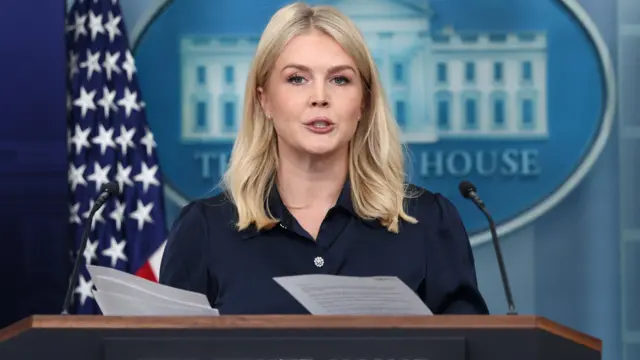
Leavitt says tariff-related revenues have passed $150bn
Karoline Leavitt says that customs and tariff revenues have already totalled more than $150bn since Trump took office, “leading to the first June budget surplus in nearly a decade”.
“Those revenues will skyrocket even further starting tomorrow when new reciprocal tariff rates take effect,” she adds.
The US government has already collected more than $100bn in tariff revenue this fiscal year (which began in the fall), a record.